Social Media Management in 2026: How to Build a System That Actually Scales
Social media management is the ongoing practice of planning, publishing, engaging, and measuring content across platforms like Instagram, LinkedIn, TikTok, and X. Done well, it turns scattered, reactive posting into a repeatable system that grows the audience, builds trust, and drives measurable revenue. For most brands today, it isn’t a “nice to have” – it’s the front door to the business.
The problem? Most teams are still managing it manually. They juggle spreadsheets, screenshots, and last-minute posts, then wonder why growth feels random. The brands winning right now have replaced that chaos with structure – and increasingly, with automation.
Why Social Media Management Matters More Than Ever
Attention is the scarcest resource online, and social platforms are where it lives. A consistent presence keeps your brand top-of-mind, but consistency at scale is hard. You’re expected to post daily, respond within minutes, track a dozen metrics, and adapt to algorithm changes that never stop.
That pressure is exactly why so many businesses now treat social media management as a dedicated function rather than an afterthought. Whether you handle it in-house or outsource to social media services, the goal is the same: show up reliably, sound human, and prove that the effort actually moves the needle.
The Rise of AI Social Media Workflows
The biggest shift of the past two years is the arrival of ai social media tooling. AI now drafts captions, suggests posting times, repurposes long-form content into clips, and even flags comments that need a real reply. Used carelessly, it produces generic filler. Used well, it removes busywork so your team can focus on strategy, creativity, and genuine engagement.
The key is human oversight. AI should accelerate a clear brand voice, not replace it. The best results come from pairing automation with a person who understands your audience – a partnership, not a handoff. Teams that get this balance right publish more, respond faster, and still sound authentically like themselves.
If you want a deeper walkthrough of how AI fits into a modern workflow, this guide on social media management with AI breaks down the practical steps.
Choosing the Right Social Media Management Tools
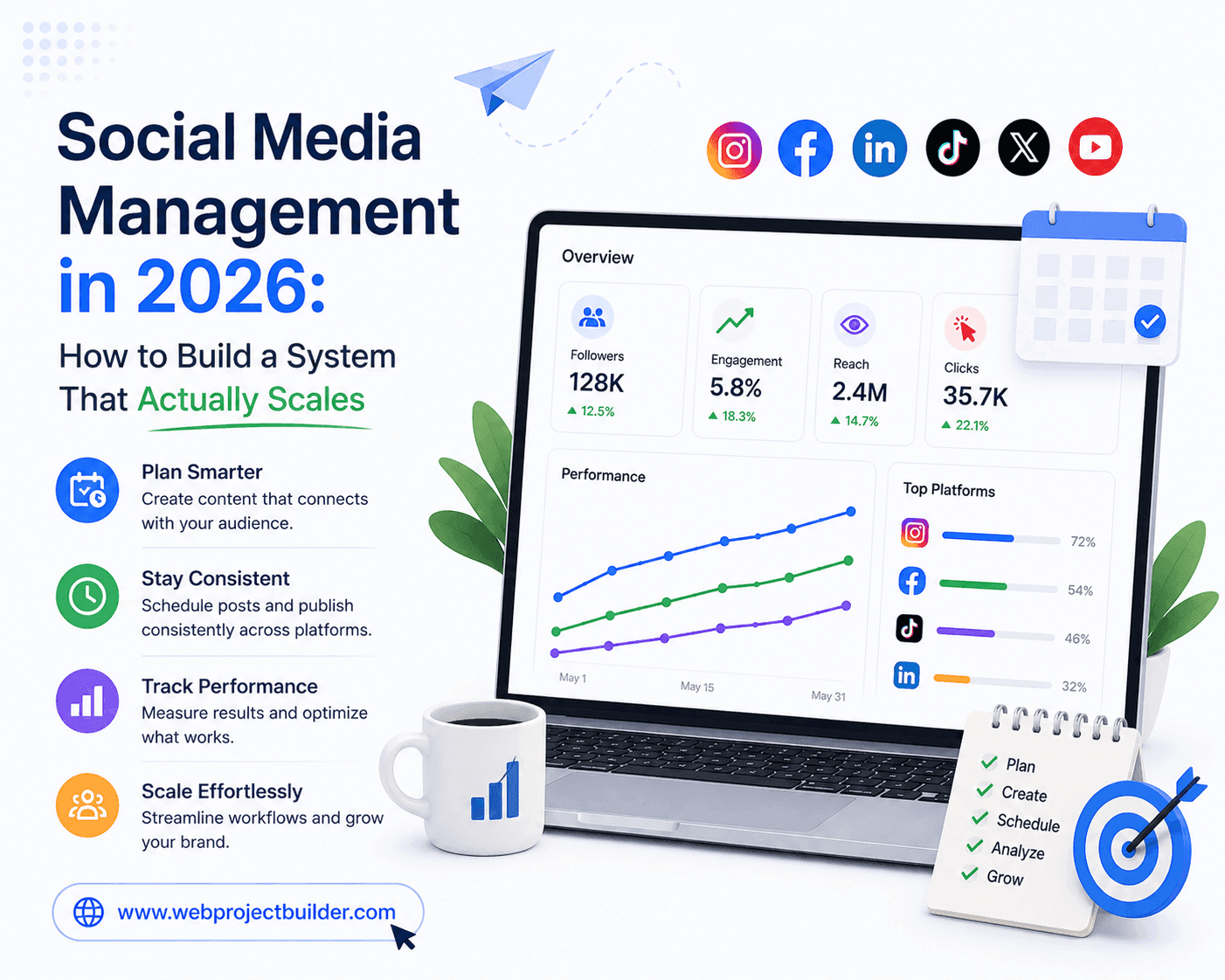
You don’t need twenty apps – you need the right few. Strong social media management tools typically cover four jobs:
- Scheduling & publishing – plan a full week or month in one sitting.
- Engagement – manage comments and DMs from a single inbox.
- Analytics – track reach, engagement, and conversions in one dashboard.
- Collaboration – approvals and workflows so nothing goes out off-brand.
When evaluating options, prioritize tools that connect to your platforms, fit your team size, and report on metrics tied to business outcomes – not vanity likes. A lightweight setup you actually use beats an enterprise suite you ignore.
Building a Repeatable System
The tools matter less than the system behind them. A sustainable approach looks like this:
- Define your goals – awareness, leads, or sales. Pick one primary focus.
- Build a content calendar – themes and formats mapped to each platform.
- Batch your creation – produce in blocks, then schedule ahead.
- Engage daily – replies and conversations, not just broadcasts.
- Review monthly – double down on what works, cut what doesn’t.
Repeat that loop, and growth stops feeling like luck. It becomes an engine.
The Bottom Line
Social media management in 2026 rewards teams that combine consistency, smart tooling, and thoughtful use of AI. Whether you’re a solo founder or scaling an agency, the winning formula is the same: a clear system, the right tools, and a human voice guiding it all.
Ready to modernize your workflow? Explore the full AI-powered social media management guide